Can't Stop Changing Your Wallpaper? Your Brain Is Trying to Tell You Something
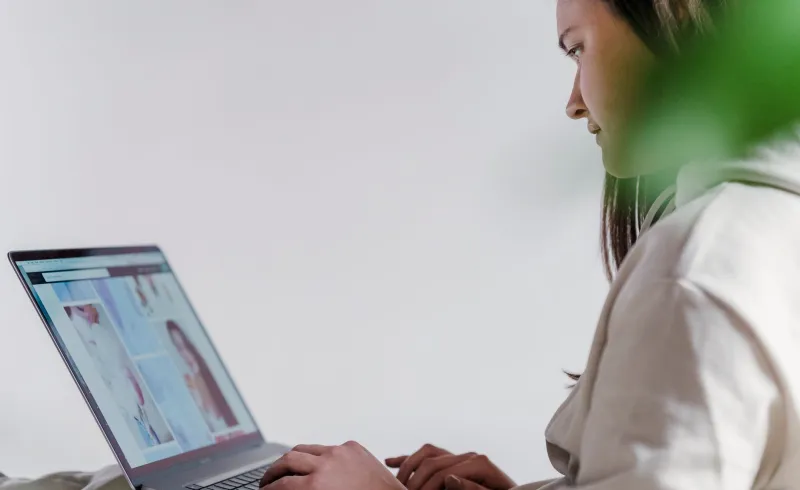
It starts innocently enough. You're halfway through a Tuesday afternoon, the work isn't flowing, and before you know it you've spent 25 minutes deep in a wallpaper rabbit hole, cycling through moody forest shots, abstract gradients, and lo-fi city scapes. You settle on one. By Thursday, it's gone.
Sound familiar? For a surprisingly large chunk of desktop users, wallpaper swapping is practically a ritual — sometimes daily, sometimes weekly, rarely with a clear reason. But here's the thing: there is a reason. Several, actually. And most of them live inside your head.
The Novelty Loop Your Brain Can't Quit
Human brains are hardwired to respond to new stimuli. It's called the novelty bias, and it's the same neurological mechanism that makes you click on a headline you've never seen before or rearrange your living room furniture on a whim. When you swap your wallpaper, your brain gets a small but real hit of dopamine — the "ooh, that's new" chemical reward that's been keeping our species curious since long before screens existed.
The problem — or the feature, depending on how you look at it — is that this reward fades fast. A wallpaper that felt fresh and energizing on Monday becomes visual white noise by Wednesday. Your brain has categorized it, filed it away, and stopped reacting to it. So you go hunting again.
For people with higher baseline novelty-seeking tendencies (a trait that researchers often link to extroversion and openness to experience in the Big Five personality framework), this cycle spins faster. These are the folks with 47 wallpapers saved in a folder labeled "maybe" and a different background every time you glance at their screen.
Stress, Control, and the 2-Minute Reset
Here's where it gets more interesting. Wallpaper swapping isn't always about chasing something new — sometimes it's about reclaiming something small. When life feels chaotic or overwhelming, people instinctively gravitate toward micro-control behaviors. Reorganizing a desk drawer. Changing a phone case. Refreshing a background.
Psychologists call this a coping mechanism through environmental modification. It's low-effort, immediate, and gives you a tangible sense of "I changed something." In a week where your inbox is a disaster and your project deadlines are stacking up, clicking through a dozen wallpapers and landing on a calm mountain vista feels like a reset button — even if nothing in your actual workload has shifted.
This might explain why wallpaper-swapping spikes tend to cluster around high-stress periods. Midterms. Tax season. The Sunday night dread spiral. The desktop background becomes a proxy for the mental reset you actually need but can't fully take right now.
The Sticker-to-One-Background Club
On the flip side, there are users who set a wallpaper once and don't touch it for two years. What's going on there?
Research on cognitive load suggests that people who operate in high-decision-demand environments — think executives, healthcare workers, parents of young kids — often develop a strong preference for stability in low-stakes choices. It's the same psychology behind why some high-performing people wear basically the same outfit every day. Reducing micro-decisions preserves mental bandwidth for the stuff that actually matters.
For these users, their wallpaper isn't a mood board or a creative outlet. It's just the thing behind their icons. Changing it would require a decision, and they've already made enough of those today, thanks.
There's also a comfort-and-identity angle. If your current background is a photo from a road trip you took with your best friend, or the cover art from an album that defined a specific chapter of your life, it's doing more than decorating your screen. It's anchoring you. Swapping it out isn't just a visual change — it feels like letting go of something.
Seasonal Shifts and the Mood-Weather Connection
Even people who don't change their wallpapers often will notice a pull toward swapping when the seasons turn. There's legitimate science behind this. Light exposure directly affects serotonin and melatonin levels, which in turn influence mood, motivation, and aesthetic preference. As daylight shrinks in November and December, people tend to gravitate toward warmer, cozier visuals — think amber tones, soft textures, candlelit aesthetics. Come March, there's a migration toward greens, open skies, and anything that suggests forward movement.
This isn't just a vibe thing. It's your nervous system responding to environmental cues and your brain trying to close the gap between how the world looks outside and how you want to feel inside. Seasonal wallpaper rotation is, in a very real sense, a form of visual self-regulation.
Creative Restlessness: The Designer's Dilemma
For people who work in creative fields — designers, photographers, writers, developers with a visual streak — wallpaper swapping often functions as a low-commitment creative outlet. When you're deep in a client project and your creative instincts are being filtered through someone else's brief, your desktop background becomes one of the few spaces where you get to make a purely personal aesthetic call.
This group tends to swap wallpapers more frequently during periods of creative frustration or stagnation. It's not quite procrastination (okay, sometimes it is), but it's also a way of keeping the visual part of the brain engaged and stimulated when the main creative work isn't feeding it the way it should.
So What Does Your Frequency Actually Say?
There's no universal answer here, but some loose patterns are worth considering:
- Daily swappers are often high-novelty seekers or going through a particularly stimulating (or stressful) phase. The background change is a quick dopamine hit or a micro-coping mechanism.
- Weekly changers tend to be creatively engaged, mood-responsive, and tuned into their own aesthetic preferences. They're curating, not just clicking.
- Monthly or seasonal rotators are often intentional and reflective. They use their wallpaper as a soft marker of time or mood, like a low-key journaling habit.
- Set-it-and-forget-it users value stability, have strong identity anchors, or simply have more important decisions to spend their mental energy on.
None of these is better than the others. But they're all telling you something.
The Takeaway (And Maybe a Challenge)
Next time you find yourself mid-wallpaper-hunt at 2pm on a workday, pause for a second before clicking download. Ask yourself: am I looking for something new, or am I looking for a reset? Am I bored, stressed, creatively itchy, or just avoiding something?
Your answer won't always be profound. Sometimes you just want a cool picture of a neon-lit Tokyo alleyway behind your spreadsheet. That's completely valid.
But sometimes the wallpaper urge is a signal worth paying attention to — a small, pixelated nudge from your own brain saying hey, something's off, let's try something different.
We've got the backgrounds for both scenarios. Browse our full collection at WallsWeb and find the one that fits wherever you are today — even if that changes by Thursday.