Neon Grids and Glitch Fonts: Why Retro Wallpapers Have a Stranglehold on the Internet

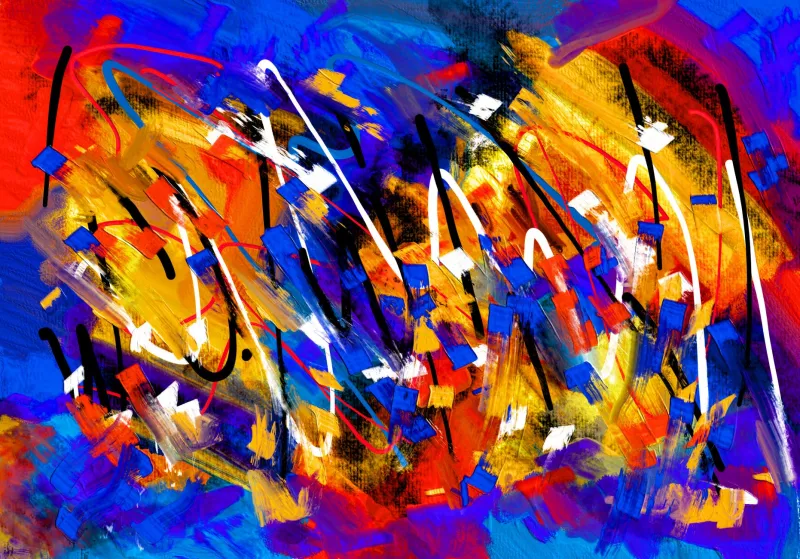
Photo: synthwave vaporwave retro neon grid 80s aesthetic desktop wallpaper, via images.yoprintables.com
Let's be honest about something. If you've spent any real time browsing wallpaper sites — including this one — you've noticed that a huge chunk of the most-downloaded, most-favorited, most-shared backgrounds aren't photorealistic nature shots or cutting-edge 3D renders. They're purple-and-pink Miami skylines. They're glowing neon grids receding into digital infinity. They're low-poly geometric shapes that look like they were rendered on a Gateway desktop in 1997.
Retro aesthetics — specifically the vaporwave, synthwave, and Y2K design movements — dominate the wallpaper space in a way that would've seemed bizarre ten years ago. And the audiences driving those downloads? Largely Gen Z and younger millennials. People who, statistically speaking, were either toddlers or not yet born when this visual language was first invented.
So what's going on here?
A Quick Glossary for the Uninitiated
Before we get into the why, it helps to be clear on what we're actually talking about, because "retro" covers a lot of ground.
Vaporwave emerged as an internet microgenre around 2010–2012, blending slowed-down elevator music samples with a visual aesthetic that borrowed heavily from early-'90s mall culture, Japanese consumer advertising, and Windows 95-era computer graphics. Think: marble busts, glitchy text, pastel purples and pinks, early CGI ocean renders.
Synthwave is more explicitly '80s-coded — it takes its visual cues from the neon-soaked futures imagined by films like Blade Runner, Tron, and The Terminator. Outrun grids, sunset silhouettes, chrome typography, fast cars on empty highways. It's the aesthetic of a future that never happened, and somehow that makes it more appealing.
Y2K aesthetics cover the visual language of the late '90s and early 2000s: translucent plastics, pixelated fonts, early Flash animations, frosted glass interfaces, and the kind of aggressive optimism that assumed the future would be chrome and silver and very, very shiny.
All three have exploded on platforms like Pinterest, TikTok, and Reddit, and their influence on wallpaper trends is massive. On WallsWeb alone, our retro and synthwave categories consistently rank among the top downloads week over week.
Nostalgia for a Time You Never Lived
Here's the part that makes cultural critics genuinely scratch their heads: the majority of people obsessing over these aesthetics have no firsthand memory of the era they're referencing. A 20-year-old downloading a vaporwave wallpaper today was maybe three years old when Windows XP launched. They didn't experience the '80s or early '90s digital world — they're nostalgic for a version of it that exists primarily in the cultural imagination.
This phenomenon has a name: anemoia, defined as nostalgia for a time you've never actually known. And it turns out the human brain is remarkably good at generating emotional responses to secondhand cultural memories absorbed through movies, music, and — increasingly — internet aesthetics.
Designer and creative director Marcus Hale, who has worked on branding projects for several indie game studios, described it this way in a conversation with our team: "There's something about those early digital visuals that feels handmade in a way that modern design doesn't. Every pixel had to be deliberate. There was a warmth to the limitation."
That word — limitation — comes up a lot when you talk to people who love retro digital aesthetics.
The Comfort of Constraints
We live in a design moment of essentially infinite possibility. Any color, any resolution, any texture, any effect — modern design tools can generate it in seconds. AI image generators can produce photorealistic scenes of impossible worlds on demand. And yet, the wallpapers people reach for most often are deliberately constrained: 16-color palettes, scanline effects, pixel grids, intentionally "bad" CGI.
There's a psychological principle at work here. Research into choice overload — the cognitive fatigue that comes from having too many options — suggests that constraints actually feel relieving to the overstimulated brain. When everything is possible, nothing feels meaningful. When you're working within a 256-color palette, every choice matters.
Retro digital aesthetics offer a visual version of that relief. They're bounded. Legible. They have rules you can feel even if you can't articulate them.
Artist and wallpaper creator Jess Tran, whose synthwave pieces have been downloaded tens of thousands of times across various platforms, put it bluntly: "People are drowning in content that's technically perfect and emotionally empty. A neon grid with some chromatic aberration and a fake VHS grain feels alive in a way that a lot of hyper-polished modern design just doesn't."
The Anti-Smartphone Aesthetic
There's another layer to this that doesn't get talked about enough: retro digital aesthetics are, at their core, a visual rejection of the smartphone era.
The design language of our current tech moment — iOS, Material Design, the clean minimalism of Google and Apple — is optimized for infinite scroll, constant notification, and frictionless engagement. It's designed to disappear into the background so you keep using it without thinking. It's the visual equivalent of a casino floor: deliberately unremarkable so you never look up.
Synthwave and vaporwave visuals are the opposite. They demand to be looked at. They're maximalist, weird, specific, and often deliberately uncomfortable in their uncanny-valley digital textures. Choosing one as your wallpaper is, in a small but real way, a refusal of the dominant visual language of your phone.
For a generation that grew up inside the smartphone era and has complicated feelings about it, that refusal carries emotional weight.
What This Means for Wallpaper Design Going Forward
The retro wave isn't slowing down — if anything, it's fragmenting into increasingly specific subgenres. Liminal space aesthetics (eerily empty malls and hotel corridors), dark academia, cottagecore-meets-pixel-art, and "frutiger aero" (that specific brand of optimistic, nature-meets-technology design that defined the mid-2000s Windows era) are all finding devoted audiences online.
What they share is a hunger for visual environments that feel intentional — that push back against the algorithmic smoothness of contemporary design and offer something stranger, more specific, more human in its imperfections.
For wallpaper platforms, this is genuinely exciting territory. The retro aesthetic space rewards curation and discovery in a way that generic stock photography simply doesn't. People who are into synthwave aren't just looking for a neon grid — they're looking for the right neon grid, the one that captures exactly the right blend of melancholy and electricity.
If you haven't explored WallsWeb's retro and abstract categories recently, it's worth a browse. We've been actively expanding our synthwave and vaporwave collections, and the range is genuinely impressive — from pixel-perfect '80s arcade recreations to moody, cinematic city-at-night scenes that land somewhere between Blade Runner and a late-night convenience store run.
The neon grid is here to stay. And honestly? In a world that looks increasingly like a terms-of-service agreement, we kind of need it.