Does Your Wallpaper Own Your Time? The Surprising Link Between Desktop Aesthetics and Digital Habits

Photo: Photograph by Mike Peel (www.mikepeel.net)., CC BY-SA 4.0, via Wikimedia Commons
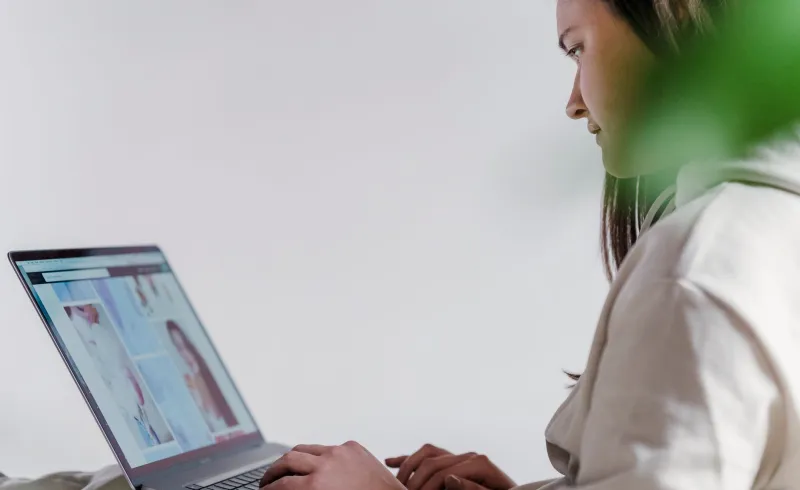
Let's be honest — most of us pick a wallpaper the same way we pick a phone case: something that looks cool in the moment, maybe matches our vibe, and gets forgotten about within 48 hours. But that background image you're barely consciously aware of? It's working on you constantly. Every glance at your screen, every time you unlock your phone or wake your laptop, your brain is processing that visual before you've even decided what app to open.
And that process? It's shaping your habits more than you probably realize.
Your Brain Sees the Background First
Here's the thing about human vision: we don't actually look at screens the way we think we do. Our brains are wired to scan environments for visual cues before narrowing focus onto specific tasks. That means when you wake your monitor, your visual cortex is already reading the wallpaper — its colors, complexity, and emotional tone — before you consciously register the app you were about to click.
Researchers studying visual attention have found that high-complexity backgrounds (think detailed cityscapes, dense abstract patterns, or heavily layered gaming art) activate more of the brain's attentional resources just to process. That's not inherently bad, but it does mean you're spending a small but real chunk of cognitive bandwidth on your background before your actual workday even starts. Stack that up across dozens of screen interactions per day and it adds up.
Simpler, lower-contrast wallpapers — soft gradients, minimal geometric shapes, muted nature photography — tend to settle the visual system faster, leaving more of your attention available for whatever you actually opened your laptop to do.
Visual Complexity and the Scroll-or-Work Decision
One of the more fascinating angles in this space is how wallpaper style seems to subtly influence which apps we gravitate toward when we first open a device. This isn't some mystical force — it's pretty grounded psychology.
When your background is visually exciting — a vibrant anime scene, a neon-drenched cyberpunk cityscape, or a high-energy sports moment — your brain is already in a stimulated state. That arousal primes you for more stimulation, which is exactly what entertainment apps like TikTok, YouTube, or gaming platforms deliver. You're not weak-willed; your wallpaper just nudged you down that road before you made a single conscious choice.
Flip that around: users who set calm, purposeful wallpapers — a clean desk aesthetic, a soft forest scene, or even just a plain deep blue — report feeling more inclined to open productivity tools first. Some productivity communities on Reddit and Discord have turned this into a deliberate practice, treating their desktop background as a kind of ambient intention-setter for their work sessions.
It's a small thing, but small things compound.
The Screen Time Connection
Here's where it gets really interesting for anyone trying to manage how much time they spend on their devices. Screen time research consistently points to the role of environmental cues in triggering habitual device use. Your wallpaper is one of the most persistent visual cues in your entire digital environment — it's always there.
A visually engaging, emotionally stimulating background can actually extend sessions. Not because the wallpaper itself is addictive, but because it keeps baseline arousal slightly elevated, making it easier to keep scrolling rather than putting the phone down. Conversely, a calming or even slightly boring background can reduce that ambient pull, making it marginally easier to close the laptop when you meant to.
Think of it this way: the same principle that makes casinos pump in oxygen and keep lighting bright and stimulating applies — in a much gentler, civilian version — to your desktop background. The environment you create shapes the behavior that happens inside it.
Seasonal and Contextual Swapping as a Habit Tool
Some productivity-focused users have started treating wallpaper swapping as a genuine behavioral tool — not just an aesthetic refresh. The logic is simple: if your background influences your default digital behavior, then deliberately changing it can help you reset patterns.
Switching to a high-energy, colorful wallpaper when you want to feel motivated for a creative sprint. Dropping to something minimal and cool-toned when you need deep focus. Keeping a completely plain background on devices you're trying to use less. It sounds almost absurdly low-tech as a productivity strategy, but it's working with your brain's existing wiring rather than fighting it.
At WallsWeb, we see this play out in download patterns too. Users browsing our abstract and gaming collections tend to engage longer on-site and across more pages — which tracks with the arousal-stimulation loop. Meanwhile, users heading straight to our minimalist and nature categories often download fewer images but return more consistently, suggesting a more intentional, habitual relationship with their backgrounds.
Finding Your Balance
None of this means you have to swap out your favorite wallpaper for a blank gray rectangle in the name of productivity. The goal isn't to eliminate visual personality from your screens — it's to be a little more intentional about what you're inviting into your daily visual environment.
A few things worth considering:
Match the vibe to the device. Your work laptop and your personal phone probably serve different purposes. A calming background on the machine where you need to focus, something more expressive on the device where fun is the point.
Notice your patterns. Pay attention to which apps you open first after unlocking your screen. If you're consistently reaching for entertainment when you meant to work, your wallpaper might be part of that equation.
Use transitions intentionally. Changing your wallpaper at the start of a new project, a new week, or a new season can serve as a genuine psychological reset — a signal to your brain that a new mode is beginning.
Don't underestimate color. Warm tones (oranges, reds, bright yellows) tend to be energizing but also slightly anxiety-inducing at high saturation. Cool blues and greens are associated with calm and focus. Neutrals and earth tones sit somewhere in the middle. These aren't rules — they're tendencies worth being aware of.
Your Background, Your Call
At the end of the day, your wallpaper is one of the most personal and easily changeable elements of your digital life. That's kind of beautiful, honestly. You have a free, low-effort lever sitting right there that has a measurable, if subtle, influence on how you interact with technology every single day.
Whether you want to use it as a productivity tool, a mood-setter, or just a canvas for things that make you happy — knowing that it matters means you can make that choice on purpose. And that's always a better place to be than letting your screens run on autopilot.
Explore WallsWeb's full collection across nature, abstract, minimal, and beyond — and next time you're choosing a background, maybe ask yourself: what do I want this screen to help me do today?